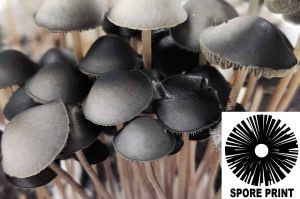
Panaeolus cyanescens TTBVI Spore Print
Category: Panaeolus Spore Prints


Description
Spores are supplied as spore prints on heavy foil. Each print is individually packaged and prepared for clean, stable storage. Spore print size and density may vary by species and variety.
The TTBVI variety of Panaeolus (Copelandia) cyanescens was originally collected in the British Virgin Islands by a local mushroom enthusiast. Cow dung harvested from a field was left in a plastic bag unattended under a tamarind tree. Within several days, several white white Panaeolus cyanescens fruits began thriving in the bag. Thus the strain is referred to as the Tamarind Tree British Virgin Islands Pan cyanescens. Incredibly vigorous and prolific, a top representation of this species.
A strain of this variety developed by GordoTEK was recognized at the 2022 cultivar cup as being the strongest ever tested.
Origin: British Virgin Islands
Line name: Tamarind Tree British Virgin Islands, commonly shortened to TTBVI
Cap: 10–40 mm in diameter, hemispheric and expanding to broadly convex to nearly plane with age. White to pale yellow, maturing to grayish white. Flesh readily bruising bluish.
Stem: 85–120 mm long, typically equal and sometimes slightly enlarged at the base. Yellowish to gray, bruising bluish where damaged.
Gills: attachment adnexed. Mottled grayish coloration in young fruit bodies, becoming black at maturity.
Spores: black, lemon-shaped, produced on 4-spored basidia.
This Panaeolus cyanescens TTBVI spore print is a must have in collections focused on rare exotic prints.
More Panaeolus print options are available in the Panaeolus Spore Prints category. For broader exotic print comparison, browse the Exotic Spore Prints category.
Related